

Drone Forensic Services
Maximus International Risk Management provides Drone Forensics services for private clients, family offices, legal professionals, insurers, businesses and organisations that require the forensic examination of drones, controllers, removable media and associated digital data. We support matters involving privacy concerns, hostile reconnaissance, evidential recovery, suspected unlawful use and wider investigative or security related issues.
Drone technology is now widely accessible, highly capable and increasingly relevant to both private security and investigations. For high net worth and ultra high net worth individuals in particular, drones can create a genuine privacy, security and reputational concern. A drone may be used to record a residence, monitor family routines, assess access points, capture movements, gather imagery of staff and visitors, or support wider hostile interest. In other cases, a drone may form part of a legal dispute, internal investigation, fraud matter or incident requiring evidential analysis.
Drone Forensics is the structured forensic processing, recovery, preservation and examination of data from unmanned aerial vehicles and related devices. Depending on the device and condition of the evidence, this can include the drone itself, its controller, paired mobile devices, removable media, application data and associated cloud or account information where lawfully available. The purpose is to recover and analyse data in a way that preserves evidential integrity and supports informed decisions, legal action or wider protective measures.
At Maximus International, Drone Forensics sits naturally within our wider investigative and technical capability. It can be supported by Digital Forensic Investigations, Private Investigations, Surveillance, Technical Surveillance Countermeasures, Cyber Security, Technical Security & CCTV and wider Security Services. This joined up structure is particularly important where a drone related incident is not an isolated event, but part of a broader pattern of exposure, monitoring or hostile intent.
What Drone Forensics Can Establish
Drone Forensics can recover and analyse a wide range of information, depending on the make, model, condition of the device and the available supporting data. This may include flight history, route information, launch and landing locations, timestamps, altitude, stored imagery, video footage, telemetry, device identifiers, controller data, paired device information and configuration history.
In the right circumstances, forensic analysis can help establish how a drone was used, where it travelled, what it recorded, how often it operated in a particular area and what associated devices or systems may have been involved. This can be highly valuable where a client needs clarity around privacy intrusion, hostile reconnaissance, suspicious repeated overflight, trespass related issues or a broader evidential requirement.
For legal professionals and insurers, this kind of analysis can also help establish chronology, corroborate or challenge accounts, preserve digital evidence and support the wider factual matrix of a case. For private clients and family offices, the priority is often different. The need is usually to understand whether a drone incident is opportunistic, reckless, invasive or part of something more deliberate.

Why UHNW Clients Instruct Drone Forensics
For UHNW individuals and families, drones represent more than a nuisance. They can expose residences, routines, travel movements, events, estate layouts and vulnerabilities in a way that would once have required physical trespass or sustained surveillance. A drone can gather imagery from above walls, gates and hedges. It can identify access routes, map property features, observe external security arrangements and capture the comings and goings of family members, staff, guests or contractors.
Where a principal has a public profile, valuable assets, ongoing litigation, business disputes, family sensitivity or prior concerns about hostile interest, a drone incident may need to be treated seriously and assessed properly. In these environments, the question is often not simply whether a drone was present, but why it was there, what it was doing, whether it has been there before and whether it forms part of a wider pattern.
Drone Forensics provides a structured way to establish those facts. It may support a private response, a legal strategy, a wider security review or an investigation into repeated activity around a residence, office, estate or event. For some clients, it will sit alongside Residential Security, Technical Surveillance Countermeasures or CCTV enhancements where the concern is ongoing rather than isolated.
Our Drone Forensics Approach
Every instruction begins with an assessment of the incident, the available evidence and the client’s objective. In some cases, the drone itself will be available for examination. In others, the matter may involve only recovered media, controller devices, associated handsets, CCTV footage, witness information or indicators of drone activity that require further investigation.
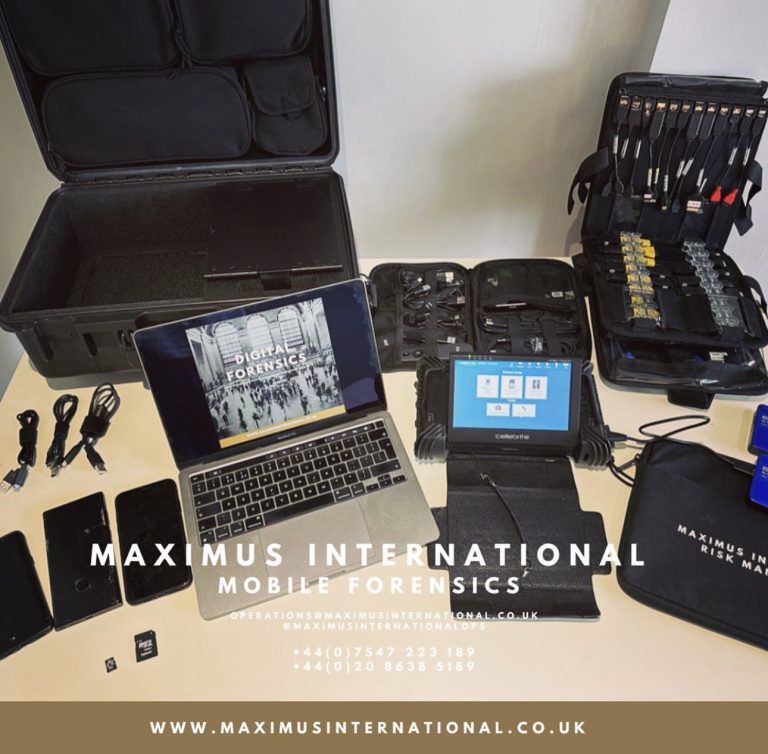
Our approach is structured around evidential preservation, forensic handling and clear analysis. Where a drone or related device is available, we focus on securing data in a manner that preserves integrity and supports later review. This may include examination of storage media, device artefacts, application data and associated records relevant to the operation of the drone.
Where required, Drone Forensics can also be integrated with Digital Forensic Investigations to examine phones, tablets, computers or storage devices linked to the operation of the drone. If the matter involves privacy compromise, unauthorised recording, hostile monitoring or suspicious technical exposure, the work may also sit alongside Technical Surveillance Countermeasures and Cyber Security to assess whether the drone activity is part of a broader issue.
The Chartered Society of Forensic Sciences
Maximus International Risk Management is proud to contribute to, and be part of, The Chartered Society of Forensic Sciences. This reflects our commitment to the standards, discipline, and continuous development that define modern forensic practice.
In matters involving drone forensics, the recovery, preservation, and examination of data must be approached with evidential rigour, discretion, and care. For clients facing sensitive, complex, and high consequence matters, this provides added assurance that our work is objective, methodical, and aligned with recognised forensic standards.
Use Cases for Drone Forensics
Drone Forensics may be relevant in matters including:
Privacy intrusion
Where a drone has been used to observe or record a residence, grounds, family environment or private event.
Hostile reconnaissance
Where drone activity suggests deliberate interest in access points, routines, security measures or estate layout.
Legal and evidential support
Where a solicitor, barrister, insurer or investigator requires structured forensic analysis linked to a civil, criminal or regulatory matter.
Corporate and commercial concerns
Where drones may have been used near sensitive premises, executive residences, private meetings or commercial facilities.
Incident investigation
Where a drone has crashed, been recovered, or is believed to be linked to suspicious conduct, repeated overflight or unauthorised data capture.
Integrated security review
Where drone activity indicates a need for wider review across Technical Security & CCTV, CCTV, Surveillance or broader Security Services.
Within a Wider Investigative Framework
Drone related incidents rarely sit neatly in a single category. What begins as a technical examination may quickly connect to wider issues involving privacy, surveillance, family protection, litigation, digital compromise or reputational risk. That is why this work is most effective when delivered within a broader investigative and protective framework.
Maximus International already operates across Private Investigations, Digital Forensic Investigations, Surveillance, Cyber Security, Technical Surveillance Countermeasures and wider Security Services. This allows a drone related issue to be assessed not just as a piece of hardware, but as part of a wider risk picture.
For wider context on UK drone regulation, privacy and security related guidance, see the UK Civil Aviation Authority drone guidance, the ICO guidance on drones and video surveillance and the NPSA guidance on hostile reconnaissance.
Confidential Consultation
Drone incidents should be assessed quickly, particularly where privacy, evidence preservation or ongoing exposure may be involved. Early handling can make a significant difference to what can be recovered, analysed and relied upon later.
At Maximus International Risk Management, we provide Drone Forensics services for clients who require clear analysis, professional handling and a measured response to sensitive matters. Whether the issue relates to a private residence, family environment, legal matter, corporate concern or wider investigation, we deliver support aligned to the facts, the context and the client’s priorities.
Contact Maximus International to discuss your requirements in confidence.