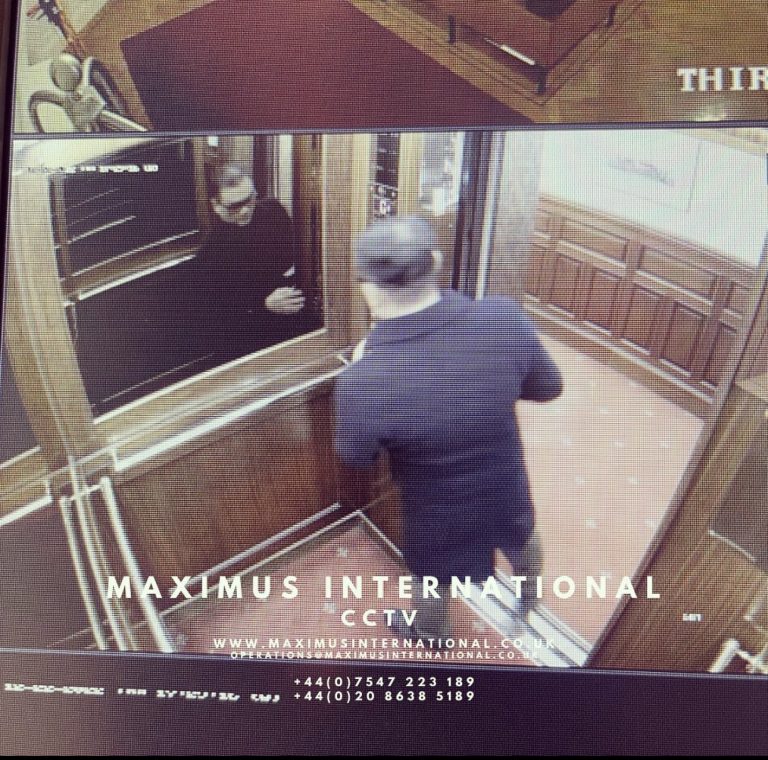
Residential Security Risk Assessment and CCTV Deployment
Prestigious Residential Property, Kensington
Client: Private Residential Building, Kensington, London
Operational Context
Maximus International Risk Management was commissioned to undertake a full residential security risk assessment of a seven storey mansion block located in Kensington, London.
The property accommodates high value residents and therefore required a security solution that enhanced protection without introducing intrusive or overt security measures. The client’s priorities included controlled access management, improved incident visibility, and deterrence of unauthorised activity while maintaining architectural integrity and resident privacy.
Security Assessment Methodology
Our consultants conducted a structured physical security survey aligned with recognised protective security principles.
The assessment included:
• Access control vulnerability analysis
• External perimeter assessment
• Communal area visibility mapping
• Lighting and natural surveillance evaluation
• Review of existing electronic security infrastructure
• Threat and risk profiling based on location and occupancy type
During the survey, we identified surveillance blind spots, unmanaged entry routes, and limitations within the legacy monitoring capability.
Technical Solution Design
Following risk analysis, Maximus International designed an integrated CCTV surveillance architecture providing layered situational awareness.
Key technical elements included:
• Strategic camera placement based on movement analysis
• Coverage optimisation across entrances, circulation routes, and shared spaces
• High definition IP cameras configured for evidential quality recording
• Secure local monitoring capability for authorised building management personnel
• Data storage configured in accordance with UK data protection and evidential standards
Importantly, installation planning considered visual impact. Equipment selection and positioning ensured minimal disruption to the building’s aesthetic environment.
Implementation
Our engineers completed installation under controlled conditions to minimise resident disruption. Cable routing, mounting solutions, and hardware integration were executed discreetly to preserve the character of the property.
System commissioning included:
• Operational testing
• Coverage validation
• Recording verification
• Staff familiarisation and handover procedures
Operational Outcome
The deployed system significantly enhanced real time situational awareness across the property.
As a result:
• Access monitoring improved immediately
• Incident response capability increased
• Unauthorised presence risk reduced
• Resident reassurance measurably improved
Furthermore, the visible yet discreet security presence created a strong preventative deterrent against opportunistic criminal behaviour and anti social activity.